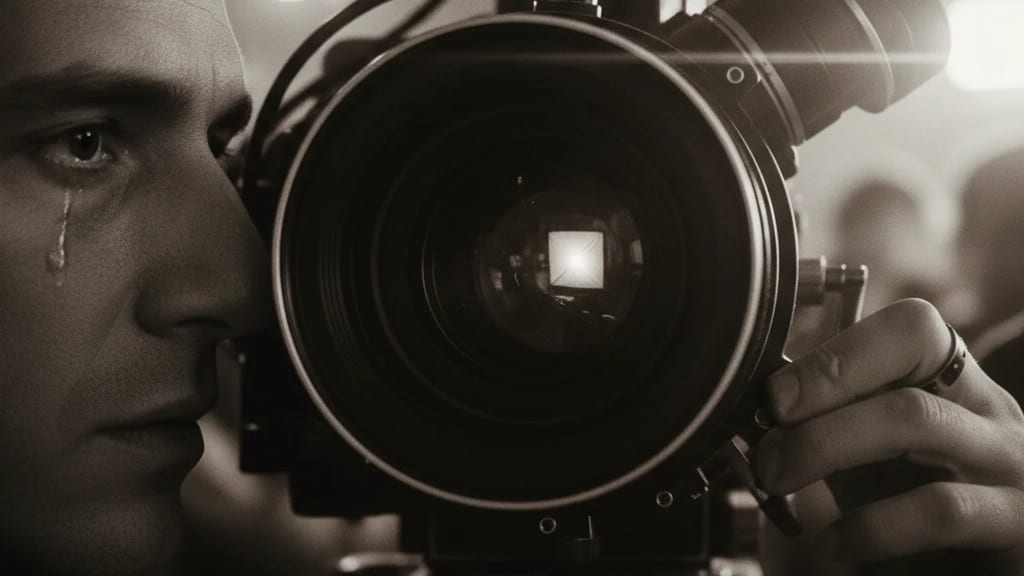
Camera positioned inches from face or object — captures micro-expressions, tension, intimate detail. Essential for reaction shots and emotional beats.
The camera moves in on the face — so close you can see the beads of sweat on the forehead, the trembling pupils, the saliva in the corners of the mouth. This is the close-up, and it works because it forces the audience to penetrate a character's inner world. On set, it's one of the most important tools: not just for emotional reactions, but also for narrative clarity. When a decision is made, an realization dawns, a lie becomes visible — the close-up captures it.
Technically, we distinguish between the classic close-up (face from the shoulders up) and the extreme close-up (ECU), which focuses on details like eyes, mouth, or hands. The ECU demands precise focus pulling: at extreme proximity, the depth of field shrinks rapidly, especially with wider apertures. A DoP doesn't plan a close-up improvisationally — they already know from the storyboard which focal length they'll use (longer focal lengths like 85mm or 100mm are kinder to the face than wide-angles, which distort it), how the eyes will be lit, where the key light will sit to make the iris sparkle.
The close-up also creates tension through the unconscious: the audience sees more than the other characters in the frame — a nervous eye twitch, an involuntary fist clenching. This is pure cinematic psychology. In editing, close-ups create rhythm: a slow transition from a wide shot to a close-up slows the pace, building tension. Rapid cuts between close-ups accelerate intensity, especially in dialogues or confrontations.
Practical advice: Always shoot close-ups from both sides, even if the scene appears one-sided. The editor will thank you. Pay attention to the axis of action — a close-up that violates the 180-degree rule is disorienting. And if you're working with handheld close-ups: every movement is magnified tenfold. Stability here isn't a luxury, it's professionalism.
Related terms
Quiz
1. Zu welchem Department gehört „Nahaufnahme"?