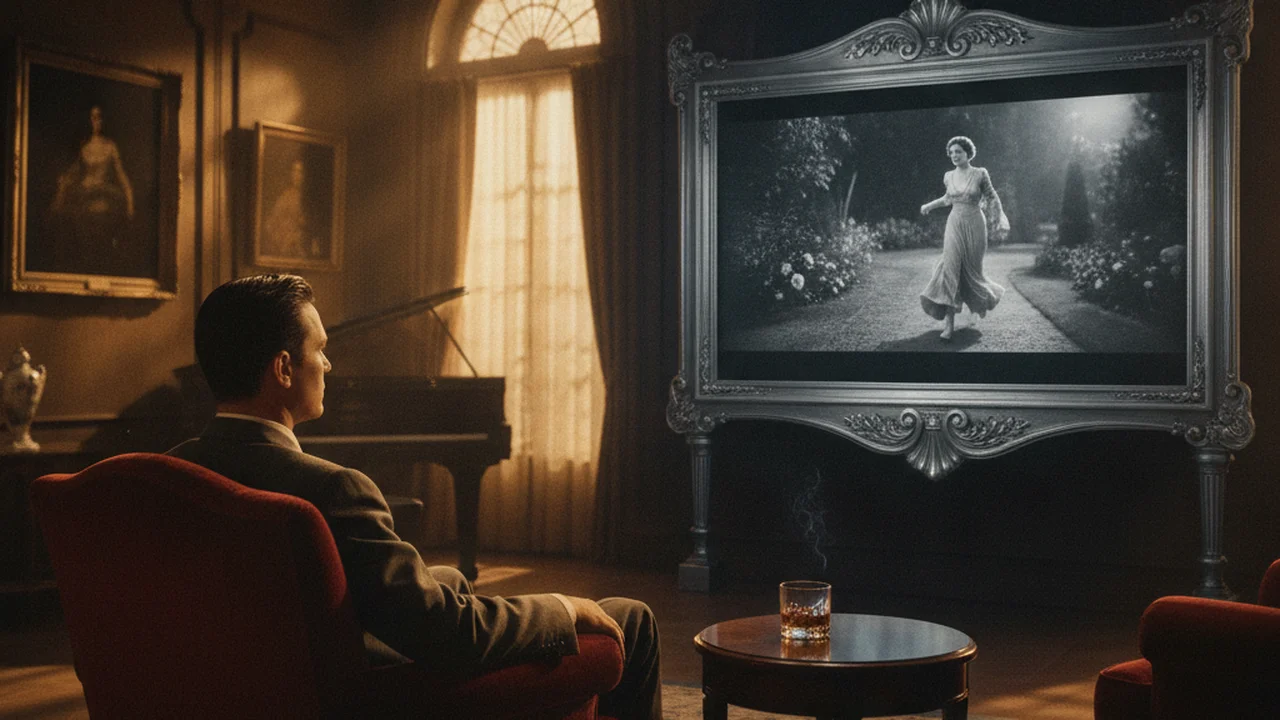
A film screened within the film — projection, monitor, or screen visible in frame. Creates distance or metafilmic commentary without breaking narrative flow.
You're in the editing room and suddenly realize: the director shot a scene where the characters are watching a film themselves. Cinema within Cinema – this isn't just a scene set in a cinema, but a deliberate cinematic device that pulls viewers out of their passive role. The screen within the frame becomes a second layer, a meta-layer. It functions like a mirror: we watch others watching. This immediately creates distance from the story itself, a reflexivity that makes the film self-aware.
In practice, this concretely means: you need two image spaces simultaneously. The outer one – our viewer space – and the inner one, on the screen or monitor. This can be ironic, tragic, or disturbing. Godard masterfully used this to explore the artificial nature of cinema. But it also works in popular films: in Scream, for example, the characters watch Nightmare on Elm Street, and suddenly the line between film and reality within the film blurs. This is the greatest strength of this device – the fourth wall isn't just broken, it's liquefied.
Technically on set, this means: you need a real screen or a large monitor. Not just filming a black wall. The lighting has to be right – the projection surface must remain visible, but the faces of the viewers shouldn't disappear completely into blackness. In editing, the tricky work begins: which film is playing there? You can show actual scenes from other films (then clarify licenses), or you can shoot your own dummy material that looks like a film from that fictional world. Some editors work with test scenes, simply grainy archival material that gives the impression of an older production.
The power of it: Cinema within Cinema creates layers of meaning. A character watching a horror film while something threatening happens next to them – this isn't mere image composition, it's dramaturgy through form. It also works in reverse: Buster Keaton's Sherlock Jr. goes even further – the protagonist dreams himself into the screen. That was pure meta-innovation in 1924. Since then, filmmakers have used this trick to play between reality and fiction without suddenly needing a completely different narrative style. It remains within the visual, within the cinematic code itself.
Related terms
Quiz
1. Was beschreibt „Kino im Kino" am besten?
2. Zu welchem Department gehört „Kino im Kino"?