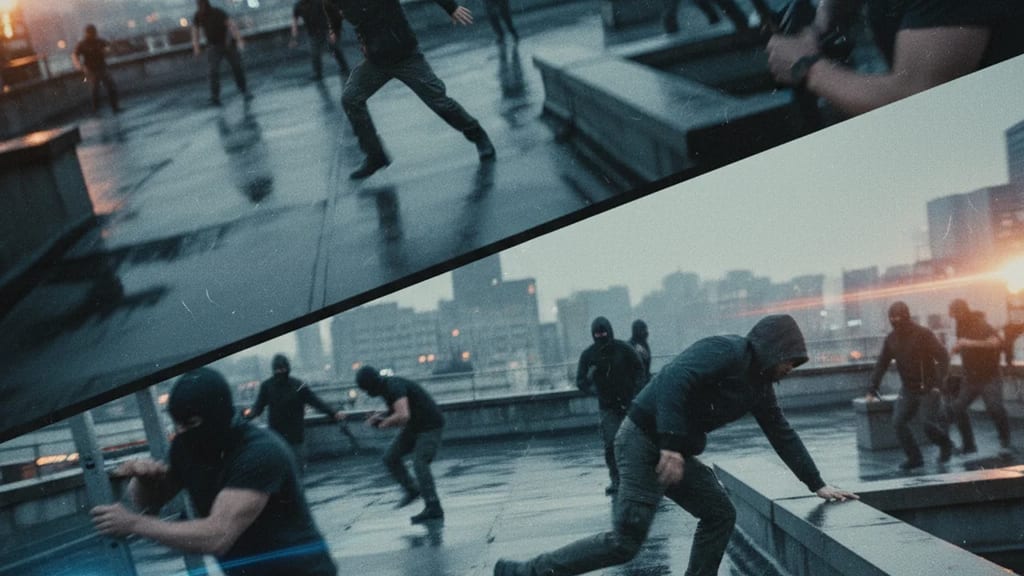
Action sequence with sustained tension where character(s) flee — told through rapid cutting, dynamic camera, and parallel editing. Core: visual momentum over exposition.
A chase sequence doesn't live off the story point – it lives off visual rhythm. You're in the edit or planning on set: the logic of the sequence is secondary. Primary is that the viewer's eye and ear are constantly under tension. This works through three mechanisms: editing frequency, spatial clarity, and sound design.
The most common mistake: directors film too much chase material and think that length equals tension. Wrong. A two-minute chase sequence shot in real-time feels sluggish. The same route in 40 seconds with parallel editing – pursuer, pursued, obstacle, pursued, pursuer close-up – becomes a thrill. You don't cut the action itself, you cut the perception of pressure.
On set, this means you need multiple camera positions on the same route. Not just frontal or lateral – but also high angles for overview, ground level for immediacy, subjective pursuer POV. The camera moves with (dolly, Steadicam), but doesn't just follow – it anticipates. When the protagonist turns the corner, I'm already there, with the camera. This creates the feeling that the chase is overrunning reality.
Practically during the shoot: plan at least three shots per chase segment. First: wide establishing shot, showing the distance between hunter and hunted. Second: close-up on the pursued, effort, terror, surroundings blur. Third: pursuer, similar proximity, equal intensity – parallel editing only works if both sides are visually balanced. Music and sound design: this is not optional. The sound cut must precede the picture cut by 12-15 frames – a chase without anticipatory audio tension feels sluggish.
The references are clear: not the long vehicle chases themselves, but their rapid cuts make them effective. A typical beginner's mistake – they rely on practical effects and real movement. Real movement is nice-to-have. Movement in the editing rhythm is mandatory.
Related terms
Quiz
1. Was beschreibt „Verfolgung / Verfolgungsjagd" am besten?
2. Zu welchem Department gehört „Verfolgung / Verfolgungsjagd"?