Filmlexikon.
Support
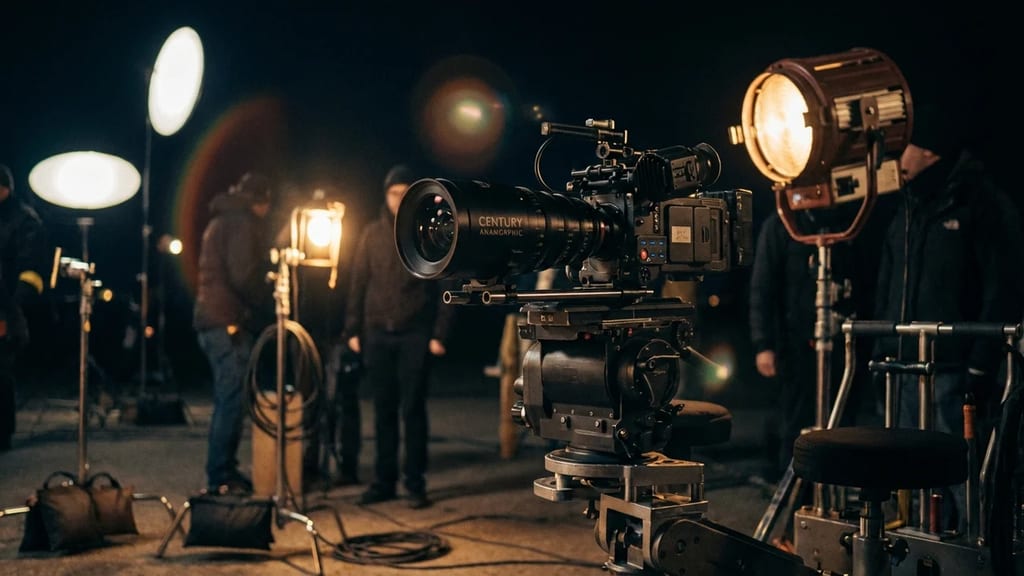
Century Anamorphic
Camera · Technique

Century Anamorphic

Murnau AI illustration
century optics century periscope cineovision anamorphic

Century Precision Optics anamorphic attachments (1989–2008) with dual cylindrical lens elements for horizontal image compression. Reduce light transmission by 1–1.3 stops; budget alternative to Panavision anamorphic systems.

Technical Details

The Century Anamorphic series includes diameters from 77mm to 138mm with precise step-up rings for various lens mounts. The optical design consists of two cylindrical lens elements that refract exclusively on the horizontal axis. Typical focal length ranges of the base lenses are between 35mm and 85mm for full frame. The attachments reduce the aperture by approximately 1-1.3 stops and require precise focus pulling, as the focal plane shifts relative to the base lens. The minimum focusing distance typically increases by 20-30%.

History & Development

Century Precision Optics developed the Anamorphic series in the late 1980s as a cost-effective alternative to expensive anamorphic lens sets like the Panavision C- or E-Series. The first models hit the market in 1989 and quickly established themselves in the independent sector. In the 2000s, Century expanded the series with HD-optimized versions featuring improved edge sharpness. After being acquired by Schneider Optics in 2008, production ceased, and used Anamorphics are now traded as sought-after vintage optics.

Practical Use in Film

Numerous independent productions of the 1990s utilized Century Anamorphics, including Kevin Smith's "Clerks II" (2006) and various music videos by directors like Michel Gondry. The typical workflow requires careful calibration of focus markings, as the focus shift varies between different focal lengths. Advantages include the moderate acquisition costs and flexibility in lens choice. Disadvantages are evident in the reduced light transmission, increased chromatic aberration at the image edges, and more complex focus pulling for fast camera movements.

Comparison & Alternatives

In contrast to true anamorphic lenses like Hawk V-Lite or ARRI Master Anamorphic, Century Anamorphics offer lower optical quality but significantly lower costs. Modern alternatives include SLR Magic Anamorphic-40 or Moment Anamorphic lenses for smaller formats. While dedicated anamorphic optics provide consistent imaging performance across all focal lengths, Anamorphics are primarily suited for controlled shooting situations without extreme lighting conditions or rapid focus pulls.

From the crafts

Perspectives

Cinematographer

Ich schätze die Century Anamorphots für experimentelle Projekte, muss aber die Fokusverschiebung präzise nachmessen und neue Schärfemarkierungen am Follow Focus anbringen. Die horizontale Streulichtcharakteristik gibt mir interessante gestalterische Möglichkeiten, erfordert aber sorgfältige Lichtführung wegen der reduzierten Randschärfe. Bei schnellen Schwenks entstehen unschöne Verzerrungen, die ich durch angepasste Kamerabewegungen kompensieren muss.

Director

Die Century Anamorphots geben mir den klassischen Cinemascope-Look mit charakteristischen Lens Flares für einen Bruchteil des Budgets echter anamorpher Objektive. Ich setze sie gezielt für nostalgische oder epische Sequenzen ein, wo das 2,39:1-Format die narrative Wirkung verstärkt. Die optischen "Schwächen" wie die weichere Randzeichnung nutze ich bewusst für verträumte oder erinnerungshafte Szenen.

Producer

Century Anamorphots kosten gebraucht etwa 3.000-5.000 Euro pro Set versus 50.000+ für vergleichbare Panavision-Optiken, was sie für kleinere Produktionen interessant macht. Die längeren Einrichtungszeiten durch komplexere Schärfeführung plane ich mit 15-20% Mehraufwand am Set ein. Der Wiederverkaufswert ist stabil, da die Produktion eingestellt wurde und Vintage-anamorphe Optiken gefragt bleiben.

More in the lexikon

Related terms

Test your knowledge

Quiz

1. Zu welchem Department gehört „Century Anamorphot"?

2. Wie viele verschiedene Fachperspektiven bietet dieser Eintrag?

Report an error
From the Filmfarm ecosystem

Understand visual language, budget productions, connect crew.

The Lexikon is part of the Filmfarm ecosystem — alongside budgeting (FilmBalance), an industry magazine (FilmCircus) and crew networking (FilmCall, CrewMesh). One shared vocabulary for the whole production.

FilmFarm FilmRadarComing soonFilmPulseComing soonFilmNumbersComing soonFilmCapitalComing soonFilmLabComing soonFilmBalanceComing soonFilmCircusComing soon