Filmlexikon.
Support
Aspect Ratio
Camera · Technique

Aspect Ratio

Murnau AI illustration
screen aspect ratio pixel aspect ratio format widescreen aspect ratios 16 9 aspect ratio

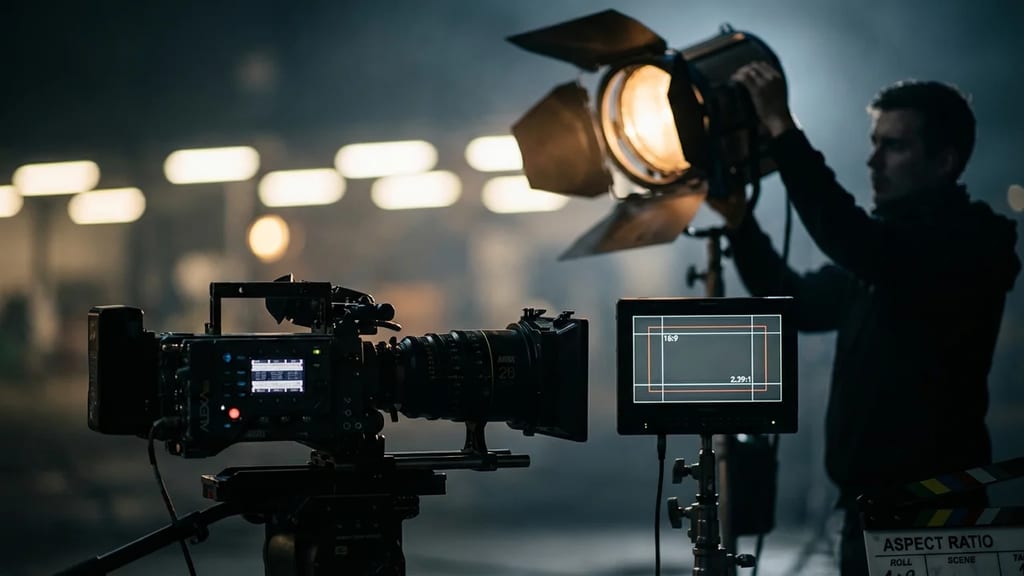
The ratio of width to height of the image frame, fundamentally shaping a film's visual character.

Technical Details

Academy Ratio (4:3): 1.37:1 - historical standard cinema format
Widescreen (16:9): 1.78:1 - TV and streaming standard
Cinemascope: 2.35:1 - anamorphic widescreen format
Super 35: 2.39:1 - modern cinema format
IMAX: 1.43:1 - large format for special cinemas

Anamorphic formats use cylindrical lenses that horizontally compress the image by a factor of 2. During projection, it is expanded again. Spherical formats use normal lenses and crop the full frame to the desired format.

History & Development

In 1889, Thomas Edison introduced the 4:3 format (1.33:1), which remained the cinema standard until 1953. In response to the rise of television, Henri Chrétien developed the anamorphic CinemaScope process (2.35:1) in 1952. Paramount responded in 1953 with VistaVision, MGM with Camera 65. In the 1960s, Panavision established itself as the leading provider of anamorphic systems. The 16:9 format emerged in 1984 as a compromise between 4:3 television and Cinemascope cinema.

Practical Use in Film

2.39:1 dominates blockbusters like "Mad Max: Fury Road" (2015) - maximizing horizontal space for action sequences and landscapes. 1.85:1 is preferred for character dramas like "Manchester by the Sea" (2016) - a more balanced ratio for faces and interactions. 4:3 is experiencing a renaissance in arthouse productions like "The Lighthouse" (2019) - creating a sense of confinement and intimacy. Wes Anderson switches between three formats in "The Grand Budapest Hotel" (2014) depending on the time period.

Comparison & Alternatives

Spherical vs. Anamorphic: Spherical lenses (Super 35) offer sharper images and easier handling; anamorphic systems produce characteristic lens flares and bokeh effects. Variable Formats allow for changes within a film - technically complex but narratively effective. Open Matte vs. Hard Matte: Open Matte shows more image information at the top/bottom during TV broadcast, while Hard Matte permanently crops the image. IMAX productions use 1.43:1 for selected sequences, while the rest remains in 2.39:1.
From the crafts

Perspectives

Cinematographer

Das Bildformat bestimmt meine Objektivwahl und Bildkomposition fundamental - bei 2,39:1 komponiere ich horizontal, nutze die Breite für mehrere Handlungsebenen, während 4:3 vertikale Führung und Nähe zu den Figuren erzwingt. Anamorphe Objektive verlangen präziseren Fokus und spezielle Filtergrößen, belohnen aber mit unverwechselbarer Optik und weicherem Bokeh.

Director

Ich wähle das Format als erstes narratives Werkzeug - 2,39:1 für epische Weite und Isolation der Figuren in der Landschaft, 4:3 für psychologische Enge und Intimität. Der Formatwechsel innerhalb eines Films markiert Zeitsprünge oder Bewusstseinszustände, verlangt aber präzise Dramaturgie, damit er nicht als Gimmick wirkt.

Producer

Anamorphe Formate bedeuten 20-30% höhere Objektivkosten und längere Drehzeiten durch komplexere Schärfeführung, während 4:3-Produktionen bei TV-Verwertung Letterboxing oder Cropping erfordern. IMAX-Versionen verlangen separate Postproduktion und begrenzen die Kinozahl, können aber 15-20% höhere Ticketpreise rechtfertigen.

More in the lexikon

Related terms

Test your knowledge

Quiz

1. Was beschreibt „Bildformat / Aspect Ratio" am besten?

2. Zu welchem Department gehört „Bildformat / Aspect Ratio"?

3. Wie viele verschiedene Fachperspektiven bietet dieser Eintrag?

Report an error
From the Filmfarm ecosystem

Understand visual language, budget productions, connect crew.

The Lexikon is part of the Filmfarm ecosystem — alongside budgeting (FilmBalance), an industry magazine (FilmCircus) and crew networking (FilmCall, CrewMesh). One shared vocabulary for the whole production.

FilmFarm FilmRadarComing soonFilmPulseComing soonFilmNumbersComing soonFilmCapitalComing soonFilmLabComing soonFilmBalanceComing soonFilmCircusComing soon