Filmlexikon.
Support
APS-C
Camera · Technique

APS-C

Murnau AI illustration
photosonics 4c hawk c series apollo anamorphic

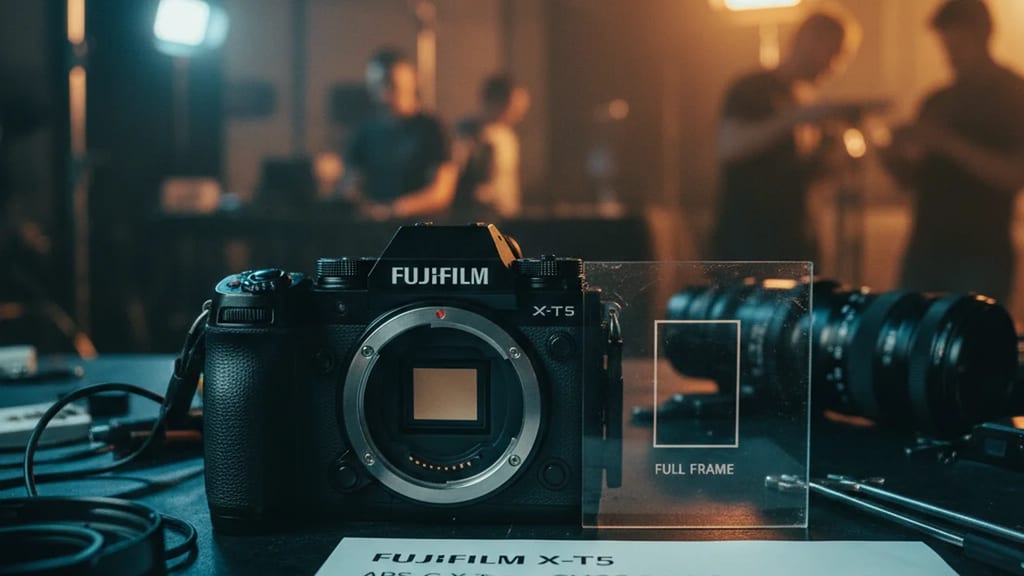
Sensor format approximately 22x15mm, offering a 1.5-1.6x crop factor compared to full frame.

Technical Details

Canon uses a sensor size of 22.2 × 14.8 mm with a crop factor of 1.6, while Sony, Nikon, and other manufacturers use 23.6 × 15.7 mm with a crop factor of 1.5. The resolution of modern APS-C sensors ranges from 16 to 32 megapixels. Due to the smaller sensor area, the photodiodes are smaller, which leads to increased image noise at the same pixel count. The depth of field is greater than with full-frame sensors at the same focal length and aperture.

History & Development

Canon introduced the first affordable digital SLR camera with an APS-C sensor in 2003 with the EOS 300D. Nikon followed in 2004 with the D70, Sony took over the Minolta division in 2006 and established the E-mount system. The breakthrough for mirrorless APS-C cameras came with Sony's NEX series in 2010. Today, mirrorless systems dominate the APS-C market, while DSLRs play only a minor role.

Practical Use in Film

APS-C cameras such as the Sony FX30, Canon EOS R7, or Fujifilm X-H2S are often used for documentaries, independent productions, and as B-cameras. The crop factor proves advantageous for telephoto shots – a 200mm lens appears like 300mm on full-frame. Netflix series like "The OA" have partially used Sony APS-C cameras for special sequences. The compact dimensions allow for gimbal setups that would be too cumbersome with full-frame cameras.

Comparison & Alternatives

Compared to full-frame sensors, APS-C offers lower costs for cameras and lenses, but poorer low-light performance and less natural bokeh. Micro Four Thirds (crop factor 2.0) is even more compact but with further compromises in image quality. Super35mm cinema cameras use sensor sizes similar to APS-C but are specialized for video production. Full-frame dominates high-end productions, while APS-C serves the mid-range market and mobile productions.
From the crafts

Perspectives

Cinematographer

Ich nutze APS-C hauptsächlich für Run-and-Gun-Drehs, wo ich schnell und unauffällig arbeiten muss. Der Crop-Faktor hilft mir bei Tieraufnahmen enorm – mein 70-200mm wird praktisch zu einem 105-300mm. Allerdings muss ich bei schwachem Licht früher zur künstlichen Beleuchtung greifen als bei Vollformat.

Director

APS-C-Kameras ermöglichen mir intimere Drehsituationen, besonders bei Schauspielern, die sich vor großen Kameras unwohl fühlen. Die größere Schärfentiefe nutze ich gezielt für Gruppenszenen, wo alle Gesichter scharf bleiben sollen. Für emotionale Close-ups bevorzuge ich jedoch nach wie vor das natürlichere Bokeh von Vollformatsensoren.

Producer

APS-C halbiert praktisch mein Kamerabudget gegenüber Vollformat-Setups, ohne drastische Qualitätseinbußen. Die Objektivauswahl ist riesig und günstiger, besonders bei längeren Brennweiten durch den Crop-Faktor. Für Streaming-Inhalte und Online-Produktionen ist das Format völlig ausreichend und rechnet sich durch die Kostenersparnis bei Equipment und Transport.

More in the lexikon

Related terms

Test your knowledge

Quiz

1. Zu welchem Department gehört „APS-C"?

2. Wie viele verschiedene Fachperspektiven bietet dieser Eintrag?

Report an error
From the Filmfarm ecosystem

Understand visual language, budget productions, connect crew.

The Lexikon is part of the Filmfarm ecosystem — alongside budgeting (FilmBalance), an industry magazine (FilmCircus) and crew networking (FilmCall, CrewMesh). One shared vocabulary for the whole production.

FilmFarm FilmRadarComing soonFilmPulseComing soonFilmNumbersComing soonFilmCapitalComing soonFilmLabComing soonFilmBalanceComing soonFilmCircusComing soon