Cinematographer
16mm cameras are light, mobile, and versatile. The look is different from 35mm – deeper depth of field, different bokeh characteristics. 16mm lighting design is more subtle and has its own 'temperament'.
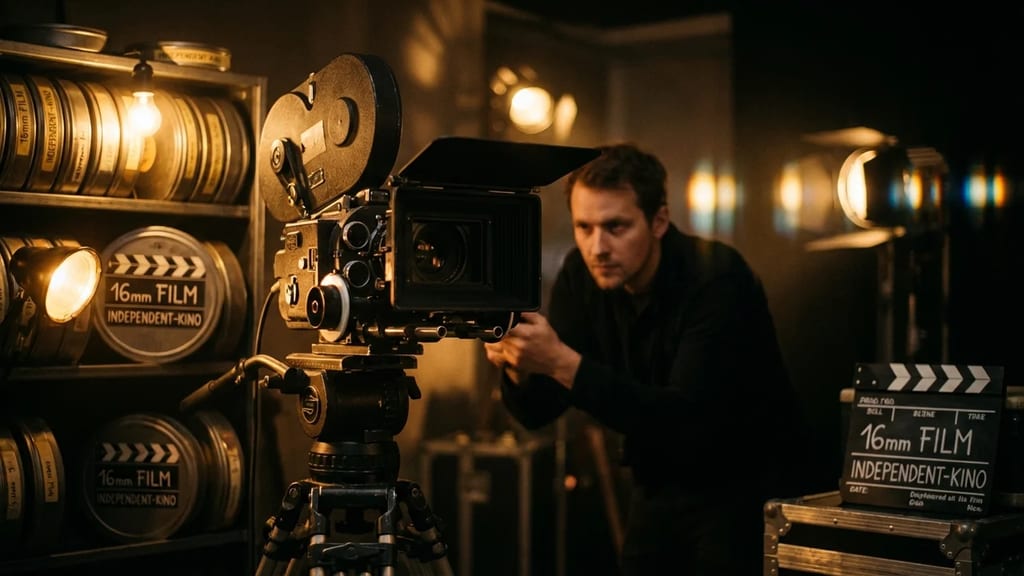
16mm film format, a smaller format between 8mm and 35mm. Historically used for independent cinema, documentaries, and educational materials. Now returning as an artistic choice in modern independent and experimental filmmaking.
Rouch and Morin used the mobility of the 16mm camera to film Parisian citizens in unscripted everyday situations – a founding document of Direct Cinema and Cinéma Vérité made possible only by the format's lightness and accessibility.
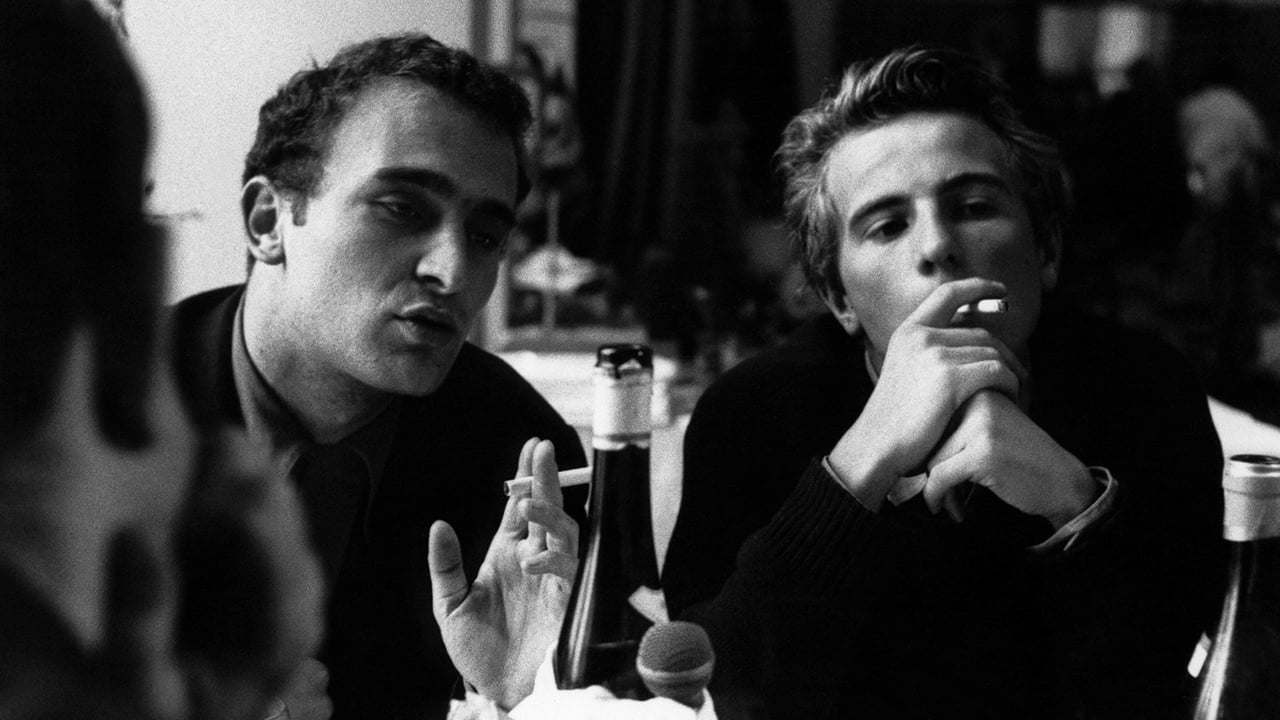
Cassavetes shot 'Faces' on 16mm to achieve maximum closeness to his characters – the visible grain and rough texture of the format became an aesthetic expression of emotional immediacy in American independent cinema.
Shot over five years with 16mm cameras, the format allowed the filmmakers to stay close to their protagonists and capture authentic moments that would have been impossible with heavier 35mm equipment.
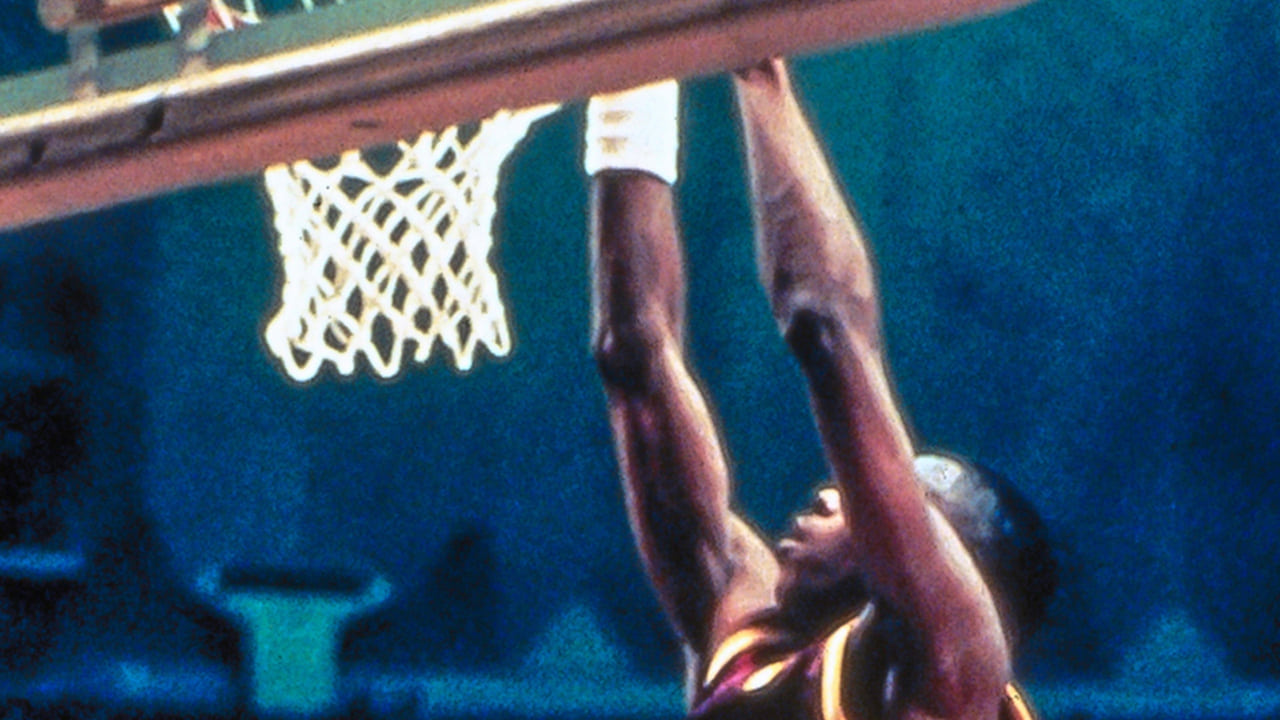
Barry Jenkins and James Laxton chose 16mm for portions of 'Moonlight' to create a specific warmth and texture that visually underscores the film's sense of memory and vulnerability – evidence of the format's enduring artistic relevance.

Film stills sourced via the TMDB API. This product uses the TMDB API but is not endorsed or certified by TMDB. themoviedb.org ›
The 16mm film format has a rich and complex history:
Founding and Early Use:
Cultural Impact:
Film Format Specifications:
Fundamentals:
Film Types:
| Type | ASA | Grain | Usage | Advantages |
|---|---|---|---|---|
| 50T | 50 | Very fine | Bright daylight | Sharpness, color saturation |
| 100T | 100 | Fine | Normal day/indoor | Balanced |
| 200T | 200 | Medium | Low light | Mobile flexibility |
| 400T | 400 | Coarse | Very dark | Extreme mobility |
| 50D | 50 | Very fine | Day (ECN-2) | Artistically controlled |
| 100D | 100 | Fine | Day (ECN-2) | Standard daylight |
Camera Magazines:
Projection and Digitization:
Optical Characteristics:
Film Cameras (still in production/repair):
| Model | Year Made | Type | Magazine | Special Feature |
|---|---|---|---|---|
| Bolex H-16 EL | 1950s-1970s | Handheld | 100-400ft | Legend, still in use |
| Eclair NPR | 1960s | Professional | 1200ft | Documentation standard |
| Arriflex 16SR | 1980s | Professional | Variable | Still industry standard |
| Aaton 16mm | 1980s-1990s | Professional | Variable | Modern features |
| Panavision 16mm | 1960s-1980s | Premium | Variable | High optical quality |
Availability Today:
16mm is NOT a commercial standard, but is used selectively:
Artistic/Film Festival Usage:
Documentary:
Why the Renaissance?
Important Distinction:
| Aspect | Regular 16mm | Super-16 |
|---|---|---|
| Image Area | 10.26 × 7.49mm | 12.52 × 7.41mm |
| Aspect Ratio | 1.37:1 (Academy) | 1.69:1 (Widescreen) |
| Perforation | Bilateral | Left side only (more image area) |
| Lens Compatibility | Standard | Compatible (with adjustments) |
| Scanning Resolution | ~2K | ~2.5-3K |
| Modern Usage | Rare | More common |
On Set:
Post-Production:
| Aspect | 16mm Film | Digital 4K | Smartphone |
|---|---|---|---|
| Grain/Noise | Characteristic | Clean | Very clean |
| Dynamic Range | ~12 stops | ~14-16 stops | ~8 stops |
| Color Rendition | Vintage | Neutral | Processed |
| Mobility | Good | Very good | Perfect |
| Archival Longevity | 50-100 years | Uncertain (20-30?) | Uncertain |
| Cost | Medium | Medium | Low |
| "Look" | Authenticity | Technical | Casual |
Why Artists Choose 16mm:
For Digital Producers Who Like 16mm Aesthetics:
(But purist argument: "This is not real - this is imitation")
16mm Film Costs (2024):
Technical Standards:
Related Entries:
16mm cameras are light, mobile, and versatile. The look is different from 35mm – deeper depth of field, different bokeh characteristics. 16mm lighting design is more subtle and has its own 'temperament'.
I choose 16mm when I need intimacy, truth, and a visceral feeling. It was used for 'real' documentaries – that's cultural memory embedded in the format itself.
1. Was beschreibt „16mm-Filmformat" am besten?
2. Zu welchem Department gehört „16mm-Filmformat"?
3. Wie viele verschiedene Fachperspektiven bietet dieser Eintrag?
The Lexikon is part of the Filmfarm ecosystem — alongside budgeting (FilmBalance), an industry magazine (FilmCircus) and crew networking (FilmCall, CrewMesh). One shared vocabulary for the whole production.