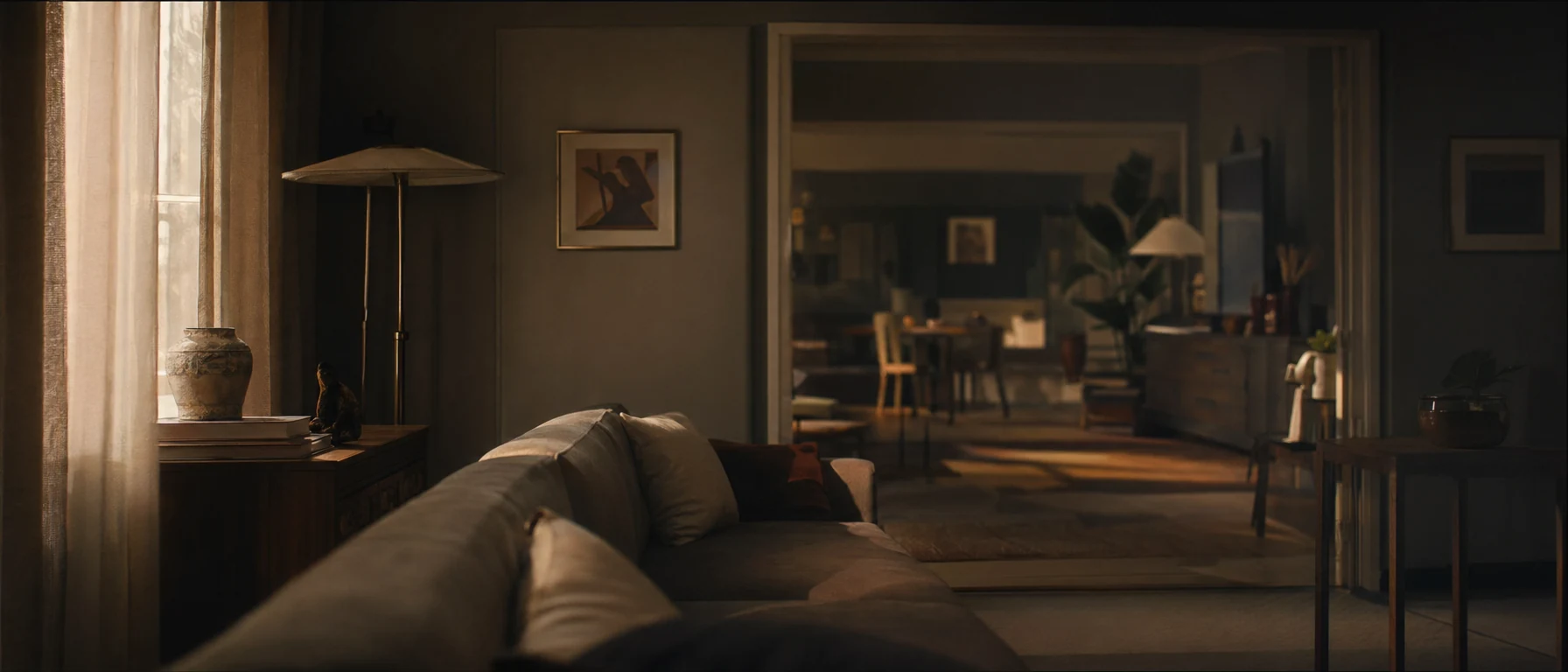
Exposure correction of 1/3 stop (factor 1.26), enabling subtle brightness adjustments between full f-stops for precise shot matching.
Technical Details
Mathematically, 1/3 of a stop corresponds to a factor of 1.26 (the cube root of 2). With an initial aperture of f/2.8, the next third stop is f/3.2, and at f/4.0, it's f/4.5. Modern cinema cameras like the ARRI Alexa or RED V-Raptor offer 1/3-stop increments as standard via their electronic controls. Mechanical iris aperture rings on classic lenses often have corresponding click stops between the main markings. The accuracy in professional systems is ±0.05 f-stops.
History & Development
Third stops emerged in the 1960s with the development of TTL exposure meters for still cameras. Kodak established precise exposure tolerances with its Vision3 film stock in 1975, making third-stop corrections meaningful. The digital revolution from 2000 onwards amplified their importance, as sensors offer less exposure latitude than film negative. ARRI first integrated 1/3-stop control directly into the Alexa camera menus in 2010.
Practical Application in Film
Cinematographer Roger Deakins systematically used third-stop corrections in "Blade Runner 2049" for seamless brightness transitions between practical light sources and LED panels. When matching different camera positions, third stops enable exact alignment without post-production exposure adjustments. Digital Intermediate Colorists use corresponding 1/3-stop corrections in DaVinci Resolve or Baselight for precise shot matching. In available light scenarios, third-stop corrections compensate for minimal cloud movements without visible brightness jumps.
Comparison & Alternatives
Full stops double or halve the amount of light, while third stops allow for subtle adjustments. Sixth stops (1/6 stop) offer even finer control but usually exceed practical measurement accuracy. ND filters with a 0.3 density correspond to one stop, and 0.1 ND filters to a third stop. Variable ND filters allow for stepless transitions but suffer from color shifts at extreme settings. ISO adjustments in 1/3 increments offer identical exposure control with constant depth of field.