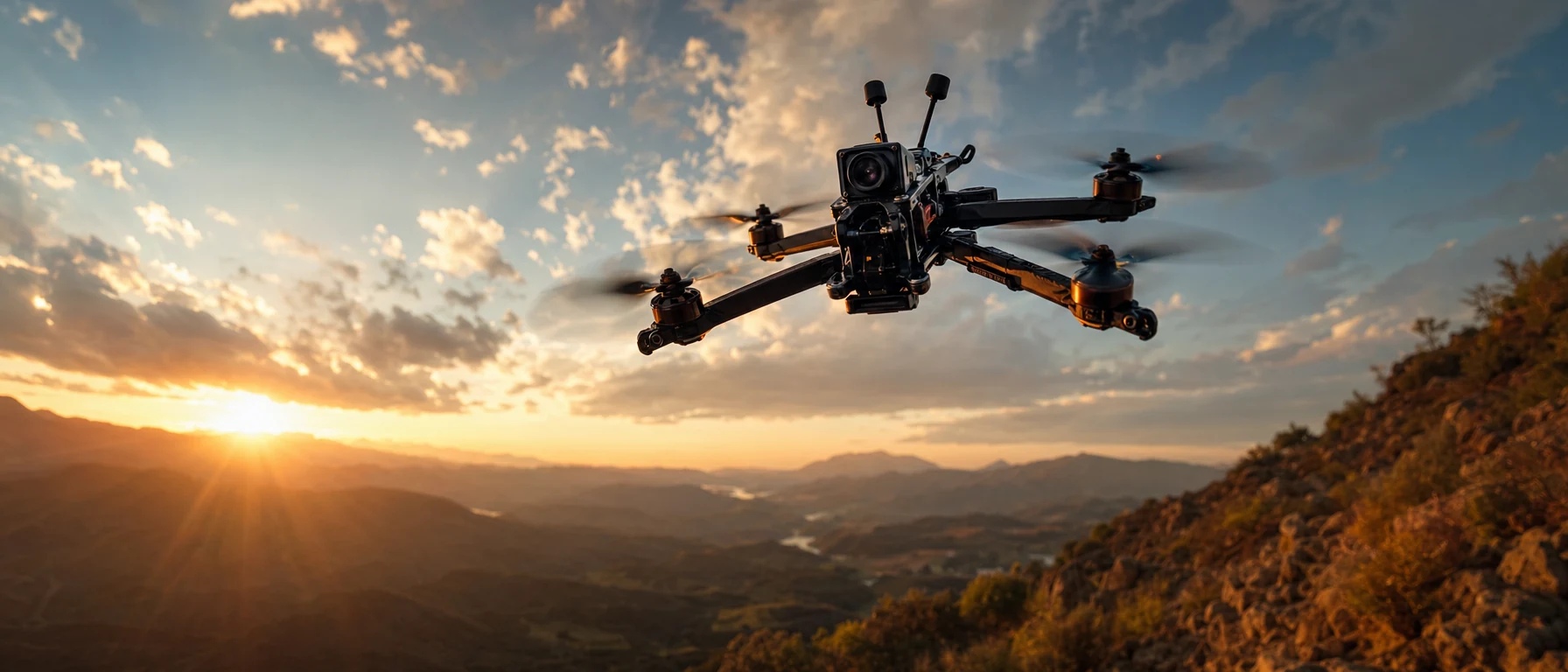
Chinese drone manufacturer specializing in custom cinema lift systems and FPV platforms. XL10 models carry cameras up to 6kg; Titan series reaches 120 km/h.
Technical Details
iFlight systems are based on 32-bit ARM processors with Betaflight firmware and support SBUS, PPM, and Crossfire protocols. Typical configurations include 4S-6S LiPo batteries (14.8V-22.2V) with flight times between 8-25 minutes depending on payload. The Titan series reaches speeds up to 120 km/h, while Cinelifter models like the XL10 can carry cameras up to 6kg. Flight controllers operate with an 8kHz gyro update rate and a 32kHz ESC protocol for precise attitude control. GPS modules offer RTH (Return to Home) functionality with 2.5m positional accuracy.
History & Development
iFlight was founded in 2013 in Shenzhen as an OEM supplier for flight controllers and established itself in the FPV racing sector from 2016 with the Nazgul series. In 2018, they entered the cinema drone market with the launch of the XL series for film productions. The acquisition of SucceX in 2019 significantly expanded their ESC portfolio. Since 2020, iFlight has increasingly focused on Hollywood-ready systems with redundancy features and certification options for commercial applications.
Practical Application in Film
iFlight drones are used in low-budget productions and independent films where alternatives to DJI are sought. The Titan DC5 carries a RED Komodo or Sony FX6 for tracking shots, while XL10 setups can also handle an Alexa Mini LF. Typical workflows include custom gimbal integration with DJI RS systems or self-built 3-axis stabilizers. FPV models enable flights through tight spaces with GoPro Hero or naked cameras for action sequences.
Comparison & Alternatives
iFlight positions itself in the mid-price range, between consumer DJI drones and professional Freefly systems. Compared to DJI Matrice, iFlight systems offer more customization options but less plug-and-play convenience. The Freefly Alta X surpasses iFlight in payload and redundancy but costs three times as much. For budgets under €5,000 and custom requirements, iFlight remains competitive, while professional setups starting at €15,000 favor established brands.